How a Blind Italian Greyhound Manages Stairs
Watching your beloved Italian Greyhound navigate the world can be heartbreaking when their sight starts to fade, and suddenly, what was once a simple staircase becomes a terrifying mountain range. The frustration and worry are palpable – you want to keep them safe, prevent falls, and ensure they can still move freely and confidently in their own home. This comprehensive guide will walk you through the practical strategies, home modifications, and compassionate training methods to help your blind Italian Greyhound master the stairs, turning fear into familiarity and keeping them secure.
Understanding Vision Loss in Italian Greyhounds and Stair Challenges
When an Italian Greyhound loses its sight, whether gradually or suddenly, their world changes dramatically. As their human, your priority shifts to ensuring their safety and comfort, especially in a multi-level home. It's not just about bumping into furniture; it's about re-learning their entire environment.
The Reality of Canine Blindness and How Iggies Cope
Vision loss in dogs, particularly in breeds like the Italian Greyhound, can manifest in various ways. Sometimes it's a slow decline, like with Progressive Retinal Atrophy in an Italian Greyhound or cataracts, where they might lose their night vision first, making familiar evening trips to the yard or navigating dimly lit rooms a challenge. Other times, it can be quite sudden, due to conditions like glaucoma or trauma. The good news is that dogs are incredibly adaptable creatures. They compensate for lost sight by relying more heavily on their other senses: hearing, smell, and touch. Their noses become their maps, their ears their radar, and their whiskers and paws their feeling-out tools. They often develop a "mental map" of their home, remembering layouts and obstacles.
However, this adaptation isn't instantaneous, and it requires our understanding and patience. A once-bold Italian Greyhound might become hesitant, anxious, or clingy, preferring to stay close to their person or in a familiar, safe spot. This change in behavior is a completely natural reaction to suddenly living in what feels like a perpetually dark room. They need our guidance and reassurance to rebuild their confidence, and acknowledging their heightened senses means we can use them to help them learn anew.
Why Stairs Are a Unique Hazard for Blind Italian Greyhounds
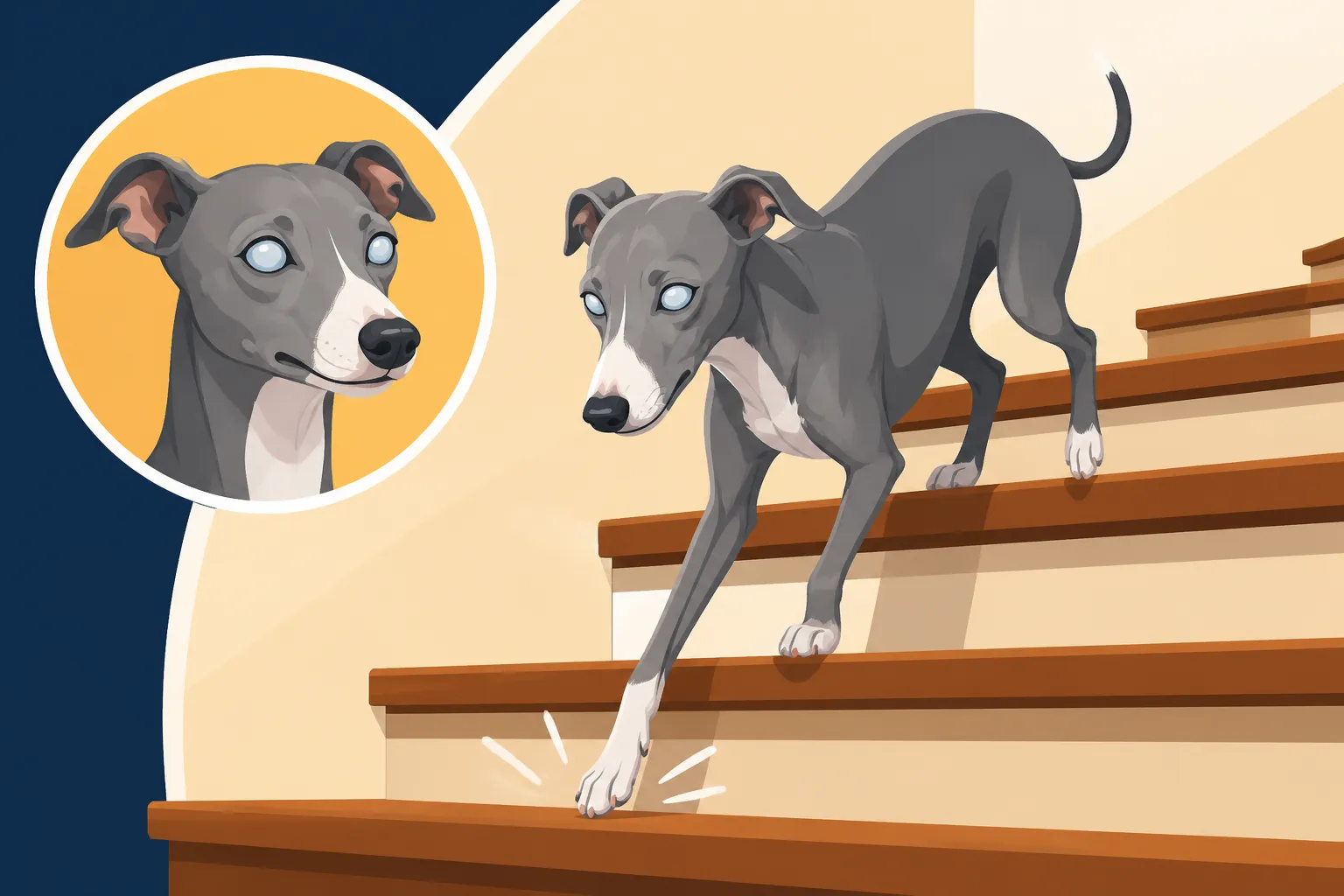
For any dog losing their sight, stairs present a significant and dangerous hurdle. Unlike a stationary piece of furniture they can eventually learn to navigate around, stairs involve a dynamic change in elevation and footing. Each step is a potential misstep, a fall, or a dangerous tumble. The slender, delicate bones of an Italian Greyhound, particularly their legs, are notoriously fragile, making any fall incredibly risky. A simple miscalculation could lead to A Broken Leg Is the Emergency Every Italian Greyhound Owner Fears, which is a nightmare scenario for any owner.
The lack of visual cues means they can't see the edge of the step, the distance to the next one, or the landing. The sensation under their paws changes with each riser, and without sight, it's disorienting. They might hesitate, plant their feet incorrectly, or even attempt to jump, believing the ground is closer than it actually is. This isn't just a physical challenge; it's a mental and emotional one. The fear of falling can be paralyzing, leading to a complete refusal to attempt the stairs, or intense anxiety every time they approach them. Understanding this intrinsic risk is the first step in creating a safe and navigable environment for your blind Italian Greyhound.
Common Causes of Blindness in Italian Greyhounds
Blindness in Italian Greyhounds, unfortunately, isn't uncommon and can stem from several inherited or acquired conditions. Knowing what might be causing their vision loss can sometimes help in prognosis and management, though for some, the damage is irreversible. One of the most talked-about inherited conditions is Progressive Retinal Atrophy in an Italian Greyhound (PRA), a degenerative disease that slowly destroys the light-sensing cells in the back of the eye. Owners often notice their dog struggling with night vision first, leading to clumsiness in low light. The Age Retinal Atrophy Appears in an Italian Greyhound can vary, but it often manifests in middle age.
Another common culprit is cataracts, which cloud the lens of the eye, eventually blocking light and causing blindness. While cataracts can sometimes be surgically removed, the decision depends on the dog's overall health and the type of cataract. Glaucoma, characterized by increased pressure within the eye, can cause rapid and painful blindness if not treated promptly. Trauma, certain infections, or even some systemic diseases can also lead to vision impairment or loss. Regular veterinary check-ups, including eye exams, are vital for early detection and intervention, though some conditions, like PRA, sadly have no cure. Understanding these potential causes helps us prepare and provide the best care for our visually impaired companions.
Practical Home Modifications for Stair Safety
Once you understand the challenges, the next step is to modify your home environment to mitigate the risks associated with stairs. This is about creating a predictable, safe, and reassuring pathway for your blind Italian Greyhound.
Securing the Staircase: Barriers and Gates
The most immediate and effective way to prevent accidents on stairs for a blind Italian Greyhound is to control access. Think of staircases as exclusion zones until your dog has mastered them with assistance, or if they are simply too risky for independent navigation. Installing sturdy baby gates at both the top and bottom of every staircase is non-negotiable. Don't cheap out on flimsy pressure-mounted gates; a determined or startled Italian Greyhound could knock them down. Opt for hardware-mounted gates that can withstand a bump or two. Even if your Italian Greyhound never attempts the stairs, a gate prevents accidental falls or disoriented wanderings onto a dangerous path.
Beyond physical gates, consider adding visual and tactile cues if there's any remaining sight, or even just for your dog's other senses. Brightly colored, high-contrast tape on the top and bottom steps can offer a subtle cue for dogs with partial vision. For fully blind dogs, textured mats or small, low-profile rugs at the top and bottom landings can serve as a "warning zone" under their paws, signaling the proximity of the stairs. The goal is to make the boundary undeniable, even without sight, ensuring they know exactly where the safe floor ends and the potential hazard begins.
Enhancing Tactile and Olfactory Cues
Since your blind Italian Greyhound relies so heavily on touch and smell, incorporating these senses into their navigation strategy for stairs can be incredibly effective. Consider using different textures on each step. Non-slip stair treads are a must for preventing slips and providing a consistent tactile experience. You can choose treads with a slightly rougher texture than your floor, signaling a change in surface. Alternatively, you could use a consistent type of carpet runner on the stairs, providing uniform traction and a distinctive feel under their paws that differs from the hallway flooring.
Olfactory cues can also be surprisingly helpful. A unique, safe scent applied subtly to the banister or the edge of each step can guide your Italian Greyhound. This isn't about dousing the area in perfume, but perhaps a very mild, non-toxic essential oil (like diluted lavender, ensuring it's safe for dogs and doesn't irritate their sensitive noses) dabbed onto a cotton ball and wiped along the edges. Reapply regularly so the scent remains consistent. For example, some owners use a tiny bit of vanilla extract. The key is consistency and subtlety, so it acts as a reliable scent trail without being overwhelming. These sensory markers work in conjunction with physical barriers to reinforce the safety zones around your stairs, transforming them from a no-go area into a carefully mapped route.
Alternative Access: Ramps and Lifts
For some Italian Greyhounds, especially those with severe vision loss, advanced age, or orthopedic issues like Patellar Luxation in an Italian Greyhound, navigating stairs, even with assistance, might be too dangerous or strenuous. In these cases, it's worth considering alternative access solutions like ramps or pet lifts. Ramps can be an excellent option for shorter staircases or as a permanent fixture. Look for ramps specifically designed for pets, with good traction and a gentle incline. While they take up floor space, a well-placed ramp can offer completely independent movement. Remember, the Italian Greyhound's delicate frame means any ramp should be solid and stable; wobbling ramps can cause anxiety and potential injury. You can find excellent options for Ramps and Steps for an Italian Greyhound's Furniture that can be adapted for stairs.
For longer, steeper, or multiple staircases, a dedicated pet lift or stair climber might be a safer, albeit more significant, investment. These devices, similar to human stairlifts, transport your dog safely up and down the stairs in a small platform or carrier. While they come with a higher price tag and require professional installation, they offer the ultimate peace of mind, eliminating any risk of falls. This can be especially valuable if your Italian Greyhound needs to go upstairs multiple times a day, or if you're concerned about lifting them safely yourself as they get older or if you have physical limitations. When planning for such significant changes, having a robust pet insurance plan like Healthy Paws can provide some reassurance if an unexpected injury were to occur during this transition period.
Training and Building Confidence for Stair Navigation
Even with the best home modifications, your blind Italian Greyhound will need careful, patient training to build confidence around stairs. This isn't about forcing them, but gently guiding them to understand their new environment.
Gradual Introduction and Positive Reinforcement
The key to teaching a blind Italian Greyhound anything, especially something as potentially scary as stairs, is patience and positive reinforcement. Start small. Don't immediately try to tackle a full flight of stairs. Begin by introducing them to just one or two steps, perhaps from a small platform or a pet step leading to a sofa. Use a leash and harness for control and gentle guidance, never pulling or dragging them. Let them sniff and explore the step with their paws. Place a high-value treat on the step, encouraging them to take a single step up or down.
Every successful interaction, no matter how small, should be met with enthusiastic praise and a delicious reward. Keep sessions short and positive, ending on a success. If they show fear or hesitation, don't push them. Take a break and try again later. The goal is to associate the stairs with good things – treats, praise, and your reassuring presence – not fear or frustration. Over time, as they gain confidence with one or two steps, you can gradually introduce more, always building on previous successes. This slow, methodical approach helps them develop a reliable mental map and the physical coordination needed.
Using Scent and Sound Cues for Guidance
Since your Italian Greyhound's other senses are heightened, leveraging scent and sound can be incredibly effective tools for navigating stairs. As mentioned earlier, a consistent, subtle scent cue on the leading edge of each step or along the banister can provide a "scent trail" for them to follow. Think of it as breadcrumbs for their nose. This helps them identify the pathway up or down, especially in new or slightly altered environments. Ensure the scent is applied consistently and isn't overwhelming.
Sound cues are equally powerful. When approaching the stairs, use a consistent verbal cue, like "stairs up" or "stairs down." Walk slowly, talking to your dog in a calm, encouraging voice. Some owners use a soft clicker or a unique jingle bell sound as they place their foot on the first step, signaling the start of the climb or descent. This auditory signal creates predictability. It tells them, "something different is coming, but I'm here to guide you." You can also tap your foot lightly on each step as you ascend or descend, giving them an auditory and tactile rhythm to follow. The consistency of these cues is paramount; they become your Italian Greyhound's reliable signals in a world they can no longer see.
Manual Assistance and Safe Handling Techniques
Even with all the modifications and training, there will be times, especially initially, when your blind Italian Greyhound needs direct manual assistance on the stairs. Knowing how to safely lift and guide your delicate Italian Greyhound is crucial. Never pick them up by their front legs or under their chest in a way that puts pressure on their fragile ribcage. The safest way to lift an Italian Greyhound is to support their chest with one hand and their hindquarters with the other, keeping their spine straight and supporting their body weight evenly. They are known for being particularly delicate, which is why their fragility (Whether a Correct Italian Greyhound Looks Fragile) is a common topic among owners.
When guiding them on stairs, walk directly in front of them (if going down) or behind them (if going up), maintaining light but firm tension on a leash and harness. Use your body as a gentle bumper or guide. For going down, you might walk a step or two ahead, with the leash guiding them to the edge, then encourage them with your voice and a treat as they feel for the next step. For going up, you can walk slightly behind and to the side, encouraging them to follow your leg and the scent/sound cues. Always move slowly and deliberately. If your Italian Greyhound is small enough, carrying them might be the safest option for steep or challenging staircases, especially when you consider The Jump Off the Sofa That Breaks an Italian Greyhound's Leg and the potential for a far more serious fall on stairs. With consistent, gentle handling, they will begin to trust your movements and cues, building their confidence day by day.
Long-Term Care and Preventing Accidents
Helping your blind Italian Greyhound navigate stairs is an ongoing commitment. It's not a one-time fix but a lifestyle adjustment that ensures their continued safety and well-being.
Maintaining a Consistent Environment
One of the most important things you can do for a blind Italian Greyhound, especially when it comes to navigating obstacles like stairs, is to maintain a consistent home environment. Once they've learned the layout, even with their heightened senses, sudden changes can be incredibly disorienting and potentially dangerous. Avoid moving furniture, pet beds, or water bowls frequently. If you must rearrange, do so gradually and guide your Italian Greyhound through the new layout repeatedly, helping them to rebuild their mental map. This consistency is vital for their confidence and safety, particularly around known hazards like staircases.
This also extends to flooring. If you have slippery surfaces near stairs, consider adding non-slip runners or rugs. Bare hardwood or tile can be challenging for any dog, but for a blind Italian Greyhound who relies on consistent traction to feel their way, it can be terrifying and significantly increase the risk of a slip or fall. A stable, predictable environment allows them to move with greater confidence, reducing anxiety and preventing unnecessary accidents that could lead to injury. Remember, for a dog that cannot see, familiarity is their greatest comfort and safety net.
Regular Vet Check-ups and Proactive Health Management
Even after your Italian Greyhound has adjusted to blindness and learned to navigate their home, including stairs, regular veterinary check-ups remain absolutely vital. Vision loss can sometimes be a symptom of underlying health issues, and an Italian Greyhound, like many sighthounds, is adept at hiding pain. This is why How an Italian Greyhound Hides Pain is a crucial topic for owners to understand. Your vet can monitor their eye health, check for any progression of eye diseases, and manage any associated pain, for example, from glaucoma. Moreover, a comprehensive annual exam, or even more frequent check-ups as they age, helps ensure their overall physical condition is optimal for mobility.
This includes monitoring their weight, joint health, and muscle tone. An overweight Italian Greyhound will have more difficulty with stairs, and weakened joints could make them prone to injury. Discuss appropriate exercise levels with your vet to maintain strength without undue risk. Proactive health management can significantly impact their quality of life and ability to manage their environment safely. Having pet insurance, like Healthy Paws, can be a massive relief, covering a portion of these regular vet visits or unexpected treatments if your blind Italian Greyhound were to have an accident or develop other age-related conditions. This comprehensive approach to their health supports their ability to navigate the world confidently, stairs and all.
Supporting Your Blind Italian Greyhound's Overall Well-being
Life with a blind Italian Greyhound means embracing new ways to engage with them and supporting their emotional well-being as much as their physical safety. Don't let their blindness limit their enrichment. They still need mental stimulation and joyful experiences. Engage them with scent games, puzzle toys filled with treats, and play sessions using noisy toys that they can track by sound. Continue to take them on walks, but perhaps on a shorter, more predictable route, always on a leash, allowing them to explore the world through their nose. Talk to them often, letting them know where you are and what you're doing.
It's also important to recognize that Caring for an Italian Greyhound Past Eleven often means dealing with sensory decline, and vision loss can be part of that. As they age, they might also experience hearing loss or cognitive decline, which can further impact their navigation skills. Be patient, continue to offer reassurance, and celebrate every small victory. Your presence, your voice, and your consistent routine become their anchors in a world without sight. With love, dedication, and the right adaptations, your blind Italian Greyhound can continue to live a full, happy, and confident life, even mastering those once-intimidating stairs.
Disclaimer
The information provided in this guide is for general informational purposes only and does not constitute professional veterinary advice. Always consult with a qualified veterinarian or veterinary specialist for any health concerns or before making any decisions about your pet's medical care or treatment.