What Non Slip Flooring Costs for an Italian Greyhound
One of the most heart-stopping moments for any Italian Greyhound owner is witnessing their delicate companion slip and slide across a polished floor. That sudden loss of traction, the frantic scrabble, and the sickening thud can lead to a broken leg in an instant, a truly devastating experience for both dog and human. This guide is here to walk you through the various options for non-slip flooring, helping you understand the costs involved in creating a safer, more confident environment for your beloved Italian Greyhound, and hopefully sparing you the immense emotional and financial burden of a fracture.
The Hidden Dangers of Slippery Floors for Your Italian Greyhound
It’s no secret that Italian Greyhounds are built like tiny, elegant gazelles. Their fine bones, tall stature, and incredible speed make them incredibly graceful to watch, but also uniquely vulnerable to injury, especially on slick surfaces. Understanding why they’re at such high risk is the first step in prevention.
Why Italian Greyhounds Are So Prone to Slipping Injuries
Think about your Italian Greyhound's anatomy for a moment. They have long, slender legs with minimal muscle mass, especially around the lower limbs. Unlike some other breeds, they don't have a lot of cushioning fat or heavy bone density to absorb impact. Their paws are also designed for speed and agility on soft ground, not for gripping a hard, polished surface. When they hit a patch of slick tile, hardwood, or laminate, their delicate bones simply aren't equipped to handle the sudden, uncontrolled torsion and impact that can occur during a slip or fall.
This inherent fragility is why we often talk about how easily their bones can break. The radius, in particular, is a common fracture site. Why an Italian Greyhound's Radius Is the Bone That Breaks is a topic that far too many owners become intimately familiar with. Their playful nature, combined with this delicate build, means that what might be a minor stumble for a sturdier dog can be a serious injury for an Italian Greyhound. They are simply not built for friction-free surfaces.
Common Scenarios Where Accidents Happen
Accidents on slippery floors aren't usually planned events; they happen in the blink of an eye during everyday activities. One of the most common culprits is the infamous "zoomies" – those sudden bursts of energetic running that IGs are famous for. They'll race through the house, turning on a dime, and if that dime is on a slick floor, disaster can strike. Similarly, jumping off furniture, even low sofas, can be incredibly dangerous. They often misjudge the landing or slip upon impact, leading to a nasty fall. The Jump Off the Sofa That Breaks an Italian Greyhound's Leg is a scenario many owners know to dread.
Chasing toys, especially those that roll quickly, can also lead to slips as they try to keep up with the object of their desire. Even something as simple as coming in from the rain with wet paws can turn a normally manageable surface into an ice rink for an Italian Greyhound. The cost of veterinary care for a broken leg can be absolutely staggering, involving specialist surgeons and extensive aftercare. What Fracture Repair Costs on an Italian Greyhound can easily run into the thousands, making any preventative measure feel like a worthwhile investment. Preventing these accidents is not just about their physical well-being; it's also about protecting your peace of mind and your wallet.
Understanding Your Non-Slip Flooring Options
When you're looking to make your home safer for your Italian Greyhound, you have a spectrum of options, ranging from quick fixes for specific areas to more comprehensive, permanent solutions. It's about finding what works best for your living situation, your budget, and the specific challenges your home presents.
Temporary and Area-Specific Solutions
For many Italian Greyhound owners, a full flooring overhaul isn't feasible, at least not right away. That's where temporary and area-specific solutions come in handy. These options focus on covering the most hazardous zones or improving traction on your dog's paws directly.
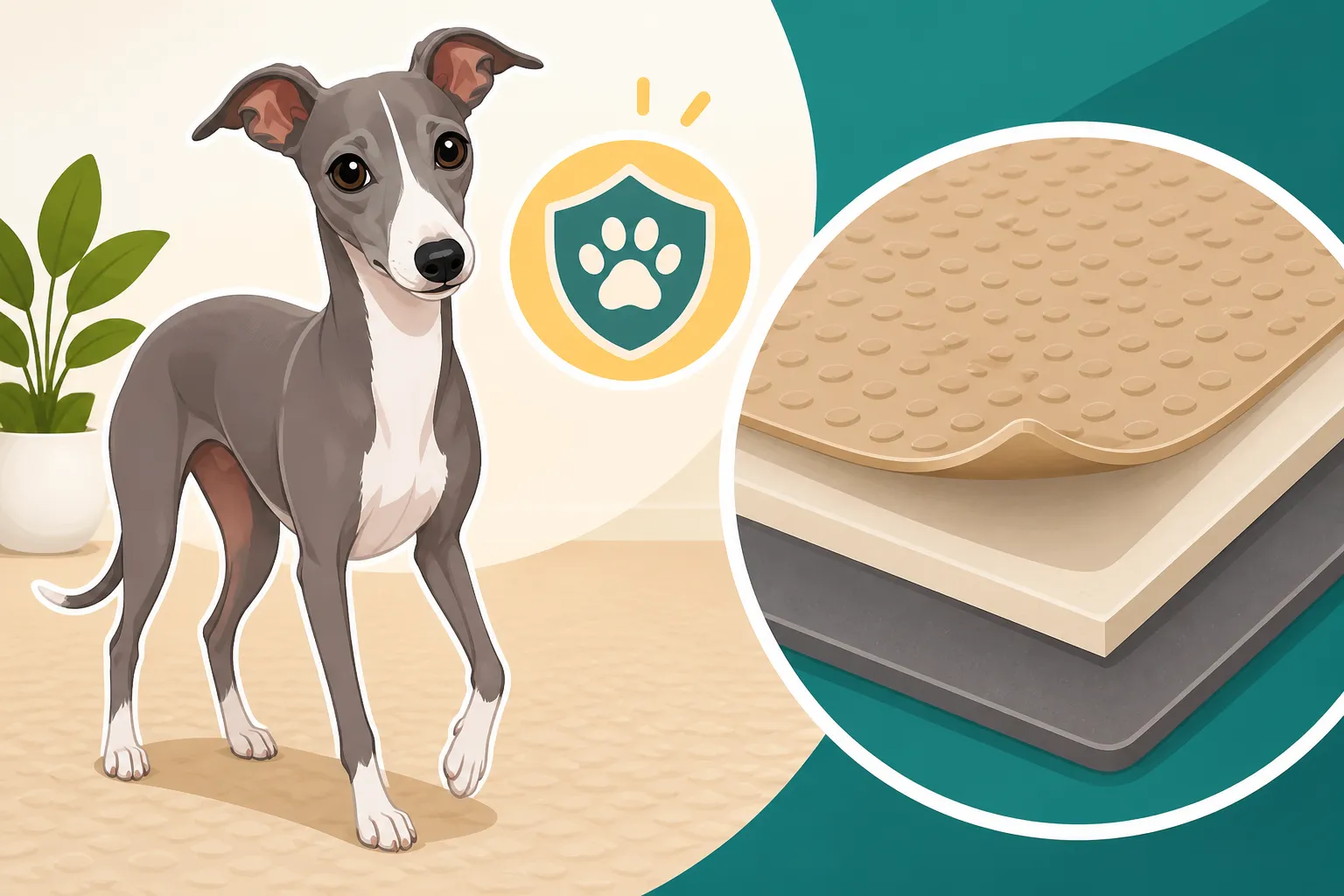
- Rugs and Runners: This is often the first line of defense. Strategically placed area rugs, bath mats, and runners can provide much-needed traction in high-traffic areas, around furniture, and especially at the bottom of stairs. The key here is to ensure they have non-slip backings, or to use rug pads underneath them to prevent the rugs themselves from becoming a tripping hazard. While effective, they can bunch up, especially if your IG is prone to "digging" or rough play.
- Paw Grips and Socks: These are external accessories that go directly on your Italian Greyhound's paws. Products like non-slip socks, paw pads, or even specialized balms can increase grip. Socks can be a bit tricky for IGs, as their delicate pasterns might be irritated, and they often manage to pull them off. Paw grips, which adhere directly to the paw pads, can be effective but require regular reapplication and diligent checking to ensure they're not causing discomfort. They’re a good short-term fix or for specific situations, but not a full-time solution for everyone.
- Adhesive Treads: For stairs, adhesive carpet treads are an excellent, relatively inexpensive solution. They provide a safe surface for your IG to navigate steps, which can otherwise be incredibly dangerous. We’ve all seen our IGs hesitate at the top of a flight of slick stairs! While we're on the topic of preventing falls from heights, remember that providing Ramps and Steps for an Italian Greyhound's Furniture is also crucial, as even low jumps can lead to injury.
These temporary solutions are fantastic for targeting problem areas without a major renovation. They allow you to test out what works and address the most immediate risks.
More Permanent Flooring Transformations
If you're in a position to consider a more permanent change, there are several flooring types that are inherently safer for Italian Greyhounds due to their texture and grip.
- Carpeting: Wall-to-wall carpeting is arguably the safest option for an Italian Greyhound, providing excellent traction and a cushioned landing for any tumbles. Low-pile carpets are generally better as they are easier to clean and don't pose a tripping hazard for tiny paws. The downside, of course, is cleaning and potential allergens, but for pure safety, it's hard to beat.
- Cork Flooring: Cork is a wonderfully resilient, natural material that has a slight give underfoot, making it comfortable for both humans and pets. Its naturally textured surface provides good grip, and it’s also sound-absorbing and insulating. It's a mid-range option that offers a good balance of safety, comfort, and aesthetics.
- Vinyl Plank or Sheet Flooring: Modern vinyl flooring has come a long way. Many options now have textured surfaces that provide decent grip. It's durable, water-resistant, and can mimic the look of wood or tile without the slipperiness. High-quality vinyl can be a great, cost-effective solution, especially in areas prone to accidents like kitchens or entryways.
- Textured Tile: If you love the look of tile, opt for options with a matte, textured finish rather than a glossy, smooth one. Natural stone with a honed finish can also offer more grip than polished varieties. However, tile still remains a very hard surface, so while it might prevent slips, it won't cushion falls.
When considering a full flooring change, think about the long-term benefits beyond just slip prevention. These options can transform your home into a truly safe haven for your Italian Greyhound, reducing anxiety for both of you.
The Costs Involved in Creating a Safer Home
Let’s be honest, talking about costs for anything related to our beloved IGs can feel a bit daunting, especially after picturing those vet bills for a broken leg! But investing in non-slip flooring is truly an investment in their long-term health and your peace of mind. It's important to understand that "non-slip" doesn't necessarily mean "expensive." There's a wide range of price points depending on the solution you choose.
Breaking Down the Price Tags
The cost of non-slip flooring for an Italian Greyhound can vary dramatically based on the type of solution you choose, the size of the area, and whether you opt for professional installation or tackle it yourself.
-
Temporary Solutions (Rugs, Runners, Treads):
- Low End: You can find small bath mats or inexpensive runners for under twenty dollars each at big box stores. A pack of adhesive stair treads might also fall into this range. These are great for immediate problem solving.
- Mid-Range: Larger, more durable area rugs with non-slip backings will run you more, perhaps fifty to a couple hundred dollars, depending on size and quality. Paw grips or socks often come in multi-packs, usually in the twenty to forty dollar range.
- Higher End: High-quality wool rugs or custom-cut runners for large spaces can easily go into the hundreds or even thousands, especially if you're covering significant square footage with premium materials.
-
Permanent Solutions (Material Costs Only):
- Entry-Level (DIY-Friendly): Basic vinyl planks or sheets can start quite affordably, often under a dollar or two per square foot. Some lower-grade carpeting options also fall into this category. These are often easier for a handy homeowner to install, cutting down on labor costs.
- Mid-Range (Good Value): Higher-quality vinyl, durable laminate with texture, or mid-grade carpet can be anywhere from two to five dollars per square foot. Cork flooring often sits in this range, providing a great balance of features and cost.
- Premium (Long-Term Investment): High-end textured tiles, natural stone, or specialty resilient flooring can push six dollars per square foot and up, often significantly more depending on the material. These choices often come with professional installation recommendations, adding to the overall cost.
Professional Installation vs. DIY: This is a huge factor. While buying materials might seem manageable, installation labor can often double or even triple the project cost for permanent flooring. For a whole-house carpet installation, for example, you're looking at significant labor. If you're handy, installing vinyl plank or even some types of carpet tiles yourself can save a bundle. Always get multiple quotes if you're going the professional route.
Here's a quick comparison of general cost shapes for different options:
| Flooring Type | Initial Material Cost (Shape) | Installation Difficulty | Traction Level (for IG) | Cushioning (for IG) | Maintenance |
|---|---|---|---|---|---|
| Area Rugs/Runners | Low to Medium | Very Easy (DIY) | High | Medium | Vacuum, occasional cleaning |
| Adhesive Stair Treads | Low | Easy (DIY) | High | Low | Wipe clean |
| Carpet (Wall-to-Wall) | Medium to High | Hard (Pro recommended) | Very High | High | Vacuum, professional cleaning |
| Cork Flooring | Medium to High | Medium (DIY possible) | High | Medium | Sweep/Vacuum, damp mop |
| Textured Vinyl Plank/Tile | Low to Medium | Medium (DIY possible) | Medium to High | Low to Medium | Sweep/Vacuum, damp mop |
| Textured Ceramic/Stone | Medium to High | Hard (Pro recommended) | Medium to High | Low | Sweep/Vacuum, mop |
Note: These are general cost shapes and can vary widely based on specific product, brand, and location.
Beyond the Initial Purchase: Maintenance, Durability, and Potential Savings
When you’re budgeting for non-slip flooring, it’s easy to focus solely on the upfront purchase and installation. However, the long-term value, maintenance, and even potential savings are crucial parts of the equation.
Durable, high-quality non-slip flooring will stand up to years of enthusiastic Italian Greyhound zoomies, nail taps, and the occasional potty accident. Materials like high-grade vinyl or cork are known for their longevity and resistance to wear and tear. While carpets offer supreme traction, they do require more frequent cleaning and eventually replacement. Investing in quality upfront can mean less hassle and expense down the road.
Moreover, consider the potential savings on vet bills. As mentioned, a broken leg on an Italian Greyhound is not just a heartbreaking ordeal, it's also incredibly expensive. Surgeries, follow-up appointments, pain medications, and rehabilitation can add up quickly. Even with fantastic pet insurance like Healthy Paws, you'll still have a deductible and co-pays, not to mention the emotional toll. Preventing just one fracture could effectively pay for a significant portion of a flooring upgrade. It's a proactive health measure disguised as home improvement.
Think about how a safer home contributes to your IG's overall well-being. A dog that feels secure on its footing is a more confident, happier dog. This can lead to less anxiety and more comfortable movement, potentially reducing other health issues down the line. While we're talking about investing in your Italian Greyhound's well-being, remember that good nutrition from quality brands like Chewy or Ollie also contributes to strong bones and overall health, making them more resilient, even if they do take a tumble. It’s all part of creating a holistic environment for your cherished companion.
Making the Right Choice for Your Home and Your Italian Greyhound
Choosing the best non-slip flooring for your Italian Greyhound isn't just about throwing down the first rug you see. It's a thoughtful process that considers your specific circumstances, your dog's needs, and your own lifestyle.
Balancing Aesthetics, Budget, and Safety
It's a common dilemma: you want your home to look beautiful, but you also need it to be practical and safe for your furry family member. The good news is that you don't have to sacrifice one for the other entirely.
- Aesthetics: Modern flooring options offer incredible variety. You can find textured vinyl that mimics high-end wood, or cork floors that add warmth and character, all while providing better grip. Area rugs, especially those with interesting patterns and colors, can be decorative elements themselves. Don't feel like you have to settle for something drab to keep your dog safe.
- Budget: Be realistic about what you can afford. If a full re-carpeting isn't in the cards right now, start with strategic rugs and runners in the highest-risk areas. You can always upgrade gradually. Remember that the long-term savings in potential vet bills can make a larger investment more palatable. Don't forget to factor in installation costs if you're not doing it yourself.
- Safety: This should always be the priority. Even if a floor looks stunning, if your Italian Greyhound can't confidently walk or run on it, it's not the right choice. Test out samples if possible. Walk on them in socks, try to slide. Imagine your IG's tiny paws trying to gain purchase.
Consider your entire household. Do you have children who might trip over loose rugs? Other pets that might scratch softer flooring? Your choice needs to work for everyone, but with a strong emphasis on your Italian Greyhound's unique needs.
Practical Tips for a Slip-Proof Home
Beyond the flooring itself, there are other crucial steps you can take to minimize slip-and-fall risks for your Italian Greyhound. These are often inexpensive, yet incredibly effective, complements to any flooring solution.
- Regular Nail Trims: Long nails on an Italian Greyhound are like wearing high heels on ice – they reduce the paw pad's ability to grip the ground. Keeping your IG's nails trimmed short, so they don't click on the floor, allows their paw pads to make full contact and provide maximum traction. This is a simple but vital piece of ongoing care. How Often an Italian Greyhound's Nails Need Trimming is a question every owner should be asking themselves.
- Paw Health: Healthy, moisturized paw pads have better grip than dry, cracked ones. Consider using a dog-safe paw balm, especially in dry climates or during winter, to keep their pads supple. Some balms can also add a slight tackiness for extra grip.
- Encourage Ramps and Steps: If you have furniture that your Italian Greyhound loves to jump on or off, actively encourage the use of ramps or steps. Place them prominently and reward your IG for using them. It takes consistent training, but it’s far safer than letting them leap. Teaching an Italian Greyhound to Use a Ramp can be a lifesaver.
- Supervise Play: While zoomies are fun to watch, supervise your Italian Greyhound's enthusiastic play, especially on any remaining slick areas. If they start to get really wild, redirect their energy to a carpeted room or outdoors in a safe, fenced area.
- Contain Wet Paws: Keep a towel by the door to wipe muddy or wet paws immediately after coming inside. This prevents them from tracking water onto slick floors and creating an instant hazard.
- Keep Clutter Down: Clear pathways. A discarded sock or a child's toy can become a tripping hazard, causing a slip even on a perfectly safe surface.
Creating a slip-proof home for your Italian Greyhound is an ongoing process, not a one-time fix. It involves smart choices about flooring, consistent grooming, and attentive supervision. By taking these steps, you’re not just preventing injuries; you’re fostering a happier, more confident, and ultimately, healthier Italian Greyhound who can thrive in your home without constant fear of a fall.
Disclaimer
This article is for general informational purposes only and does not constitute professional advice. Laws, prices and regulations vary by location and change over time. Consult a qualified professional for guidance on your specific situation.