Why a Microchip Is Not Enough for an Italian Greyhound
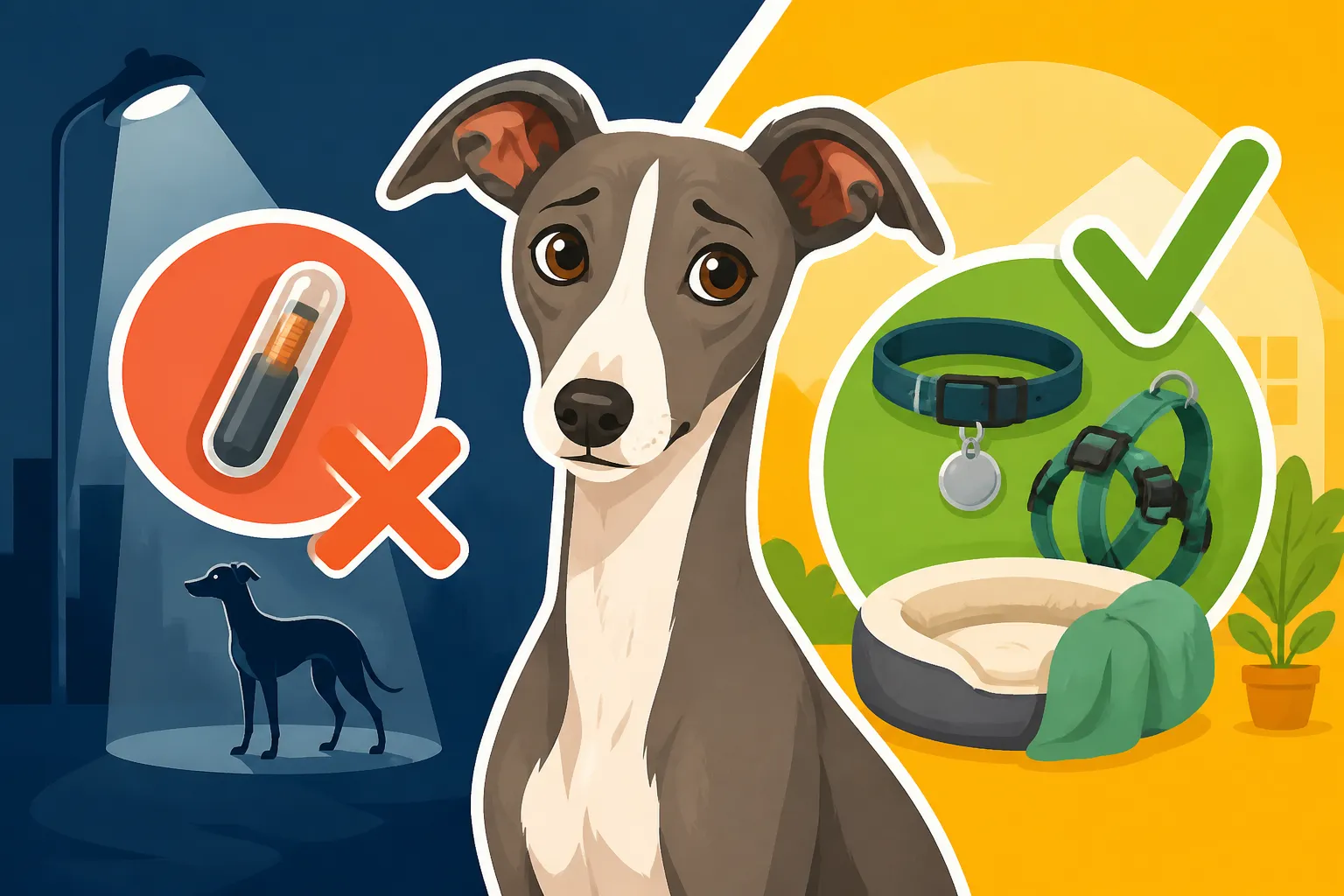
Oh, the microchip. It's pitched to us as the ultimate safety net, isn't it? That tiny chip, silently residing under your Italian Greyhound's skin, promising a reunion if the unthinkable happens. And while it absolutely plays a critical role, any IG owner will tell you, with a sigh and a shake of their head, that a microchip alone is simply not enough for our delicate, lightning-fast sighthounds. This guide will explore why this passive identification system is just one piece of a much larger, more urgent puzzle when it comes to keeping your cherished Italian Greyhound safe and sound.
The Fundamental Flaw of the Microchip for an Italian Greyhound
Let's be brutally honest about microchips: they're fantastic after your dog is already found and in safe hands. They're a permanent ID that can't be removed like a collar or tag. But that's also their biggest limitation, especially for an Italian Greyhound. They are a reactive measure, not a proactive one. Your heart sinks when you realize your little one has vanished from sight, and in that agonizing moment, a microchip offers no immediate help whatsoever.
It's a Passive System, Not an Active Tracker
Imagine this scenario: your Italian Greyhound, startled by a sudden loud noise, bolts out of an open gate. Within seconds, they're a blur down the street, their sighthound instincts kicking in to chase whatever caught their eye. At this point, the microchip is doing precisely nothing to bring them back. It's a static piece of information. It doesn't send out a signal, doesn't tell you where they went, and certainly doesn't help you in the frantic moments you're running down the street yelling their name. You're left relying on the hope that someone finds them, captures them, and then takes them to a place that can scan them. This process can take hours, even days, and in the case of a tiny, fragile IG, every minute counts.
Requiring a Scanner Means Lost Time and Opportunity
For a microchip to work, your Italian Greyhound needs to be found by a benevolent stranger and then transported to a veterinary clinic, animal shelter, or humane society that possesses a universal scanner. While most modern facilities have these, there's no guarantee that the first person who spots your panicked IG will know what to do, or even be able to safely catch them. What to Do When an Italian Greyhound Gets Loose is a situation no one wants to be in, but it happens. They might see your dog dart across traffic and assume it’s a stray. They might try to catch them, fail, and your dog keeps running. Then, if they are caught, the finder might keep them for a while, perhaps hoping to find the owner through social media before thinking of a vet visit. This delay is dangerous. Your IG is exposed to traffic, other animals, harsh weather, and the sheer terror of being lost.
What if They're Injured and Unable to Be Scanned Immediately?
This is a grim thought, but it's a realistic one for our delicate Italian Greyhounds. Their fine bones and slender build make them susceptible to injury, especially if they dart into traffic or fall while running at top speed. A Broken Leg Is the Emergency Every Italian Greyhound Owner Fears and a lost, injured IG is a nightmare scenario. If found injured on the side of a road, immediate medical attention is paramount. While a vet will eventually scan for a microchip, the initial focus will be on stabilization. If the injury is severe and requires immediate, expensive care, a Good Samaritan might hesitate without knowing an owner can be contacted. The microchip provides identification, yes, but not the instant contact that might save your IG's life in an emergency.
The Italian Greyhound's Unique Escape Artist Tendencies
Understanding why microchips aren't enough means understanding the Italian Greyhound themselves. These aren't your average, plodding backyard dogs. They possess a unique blend of traits that make them incredibly prone to getting lost.
The Power of Prey Drive and the Need for Speed
Italian Greyhounds are sighthounds, bred for centuries to spot and chase small, fast-moving objects. That squirrel darting across the yard, the rabbit hopping through tall grass, or even a blowing leaf can trigger an intense, instinctive chase response. When that prey drive kicks in, all bets are off. Their finely tuned hearing and exceptional recall training can vanish in an instant, replaced by an unstoppable urge to run. How Strong an Italian Greyhound's Prey Drive Is is something every owner learns quickly. They are fast. In an open space, an Italian Greyhound can reach incredible speeds, easily outrunning a human, and quickly covering vast distances. What Speed an Italian Greyhound Reaches means they can be out of your sight and several blocks away before you've even fully processed that they're gone. A microchip does nothing to counteract this primal instinct; it only serves as a backup if they're caught later.
The Art of the Slip: Collars, Harnesses, and Fences
Italian Greyhounds are notorious for their ability to slip out of collars and even poorly fitting harnesses. Their sleek, narrow heads and often delicate necks are simply not designed for standard flat collars. A sudden pull backward can see them backing out and free in a flash. Why an Italian Greyhound Slips a Flat Collar is a common frustration for new owners. Even many harnesses, unless specifically designed for sighthounds, can be slipped by a determined IG. This is why many owners opt for martingale collars or specially fitted harnesses, but even these aren't foolproof if not properly sized or if the dog is in a panic.
Furthermore, these dogs can be surprisingly agile climbers and jumpers despite their delicate appearance. A fence that seems perfectly secure for other breeds might be an invitation for an Italian Greyhound to scale or squeeze under. They don't dig extensively like some breeds, but if there's a weak spot, they'll find it. And if they manage to get over or under a fence, their speed and prey drive make them disappear quickly. How High a Fence an Italian Greyhound Needs is a serious consideration.
When Temperament and Environment Collide
Italian Greyhounds can be sensitive souls. Loud noises, sudden movements, unfamiliar people, or new environments can easily spook them. A door slamming, a car backfiring, or a child running past unexpectedly can turn a calm walk into a frantic dash for safety. In their panic, they are not thinking about finding their way home. They are simply fleeing. If they slip free in a bustling urban environment, the sensory overload can amplify their fear, making them run further and faster. This combination of speed, prey drive, and a sometimes-nervous disposition makes them extremely vulnerable once they're off-leash and unsupervised.
Beyond the Microchip: Active Recovery and Prevention Strategies
Since a microchip only helps after the fact, true Italian Greyhound safety involves a multi-pronged approach that focuses on both prevention and active recovery.
GPS Trackers: Your Italian Greyhound's Digital Leash
This is where technology really steps up for Italian Greyhound owners. A GPS tracker, typically a small, lightweight device that attaches to your dog's collar or harness, allows you to track their location in real-time via an app on your smartphone. If your IG bolts, you can immediately see their precise location and direct your search efforts, often preventing them from getting too far or into dangerous situations. Why an Italian Greyhound Owner Buys a Tracker really highlights this need.
Think of the peace of mind. Your IG slips the leash at the park? Open the app, see them headed towards the bike trail, and intercept them before they're out of sight. While these trackers do require a subscription service and battery charging, the investment is invaluable for an Italian Greyhound owner. Brands like Tractive or Fi are popular choices, offering features like virtual fences, activity monitoring, and long battery life. They are a game-changer for active recovery, turning a frantic search into a directed pursuit.
Robust Physical Security: Fences, Collars, and Leashes
Prevention starts at home and on walks. Ensure your yard is truly escape-proof. Check for loose fence boards, gaps under gates, or spots where an agile IG could climb. For walks, invest in gear specifically designed for sighthounds. As mentioned, martingale collars are often recommended because they tighten gently when your dog pulls, preventing them from backing out without choking them. Whether a Martingale Collar Suits an Italian Greyhound is a common question, and for many IGs, the answer is a resounding yes. Double-check harness fit constantly; a snug fit around the chest and waist is critical.
Consider a double-leash system: one leash attached to a martingale collar, and another to a well-fitting harness. This redundancy provides an extra layer of security. If one fails, you still have control. When opening doors to the outside, practice "door manners" diligently, teaching your IG to wait until released. Teaching an Italian Greyhound to Wait at a Door can literally save their life.
Training and Management: Building Good Habits
While prey drive is powerful, consistent training can help. Focus on a rock-solid recall, practiced in increasingly distracting environments. Use high-value treats and enthusiastic praise. However, always remember that an Italian Greyhound's recall is never truly 100% reliable when prey drive kicks in. Therefore, management is key.
Never trust an Italian Greyhound off-leash outside of a securely fenced area. Ever. This isn't a slight against their intelligence, but an acknowledgment of their breed-specific instincts. Why an Italian Greyhound Cannot Be Trusted Off Leash, Ever is a hard truth. Keep them on leash, or in a long line if in a safe, contained space. Use baby gates indoors to prevent access to open doors or hazardous areas, especially during times when you might be distracted.
Identification Beyond the Chip: Tags and Tattoos
While a microchip is internal, external identification is still incredibly important. Make sure your Italian Greyhound always wears a collar with an ID tag. This tag should have your current phone number and perhaps your address. A visible tag allows a finder to contact you immediately, without needing to go to a vet or shelter. Some owners even include a "reward if found" message to incentivize immediate contact.
For those considering it, some areas still offer ear tattoos as a permanent form of identification, though this is less common now with microchips being standard. It's another layer, providing visible ID that can be checked quickly.
Creating a Multi-Layered Safety Net for Your Italian Greyhound
The best approach to Italian Greyhound safety isn't one solution, but a comprehensive strategy that weaves together several layers of protection. Think of it like a safety onion: if one layer fails, there are others to catch your precious pup.
The Pillars of Italian Greyhound Safety
Let's break down these layers into a concise table to illustrate how they work together:
| Safety Layer | Purpose | How it Helps an Italian Greyhound | Limitations |
|---|---|---|---|
| Microchip | Permanent, internal identification | Confirms ownership once found and scanned. | Passive; requires capture and scanning. |
| GPS Tracker | Real-time location tracking | Allows immediate, active pursuit and recovery. | Requires charging, subscription, can be lost. |
| ID Tags/Collar | Immediate, visible contact information | Allows direct contact from a finder. | Can be lost, removed, or unreadable. |
| Secure Fencing | Prevents escapes from home | Stops opportunistic bolting from the yard. | Requires constant maintenance; IGs can be agile. |
| Sighthound Gear | Prevents slips and escapes on walks | Specialized collars/harnesses prevent backing out. | Must be correctly fitted and maintained. |
| Consistent Training | Builds good habits and reinforces recall | Creates a more responsive dog; helps in low-distraction environments. | Prey drive can override training. |
| Vigilant Supervision | Prevents opportunities for escape/loss | Constant awareness eliminates most risks. | Humans make mistakes and get distracted. |
Integrating Brands into Your Safety Plan
When it comes to purchasing these crucial safety items, or even addressing potential health issues that could arise from a lost dog situation, familiar brands can be helpful resources. For example, Chewy offers a vast array of sighthound-specific collars and harnesses, as well as various brands of GPS trackers. You can find everything from extra-secure buckle collars to specialized walking harnesses to ensure your IG is properly outfitted.
Should the worst happen and your Italian Greyhound gets lost and sustains an injury before being found, the financial strain can be immense. What Fracture Repair Costs on an Italian Greyhound is a significant number. Having pet insurance from providers like Healthy Paws can provide a critical safety net, helping to cover unexpected veterinary bills that might arise from an accident or emergency. While insurance won't prevent the escape, it can certainly ease the burden of the aftermath.
The Ongoing Commitment
Owning an Italian Greyhound is a joyful experience, but it comes with the unique responsibility of protecting a breed that is often oblivious to its own fragility and uncanny ability to disappear in a flash. The microchip is a valuable tool, a final resort, but it's never the only tool. It’s a bit like having an emergency spare tire – you hope you never need it, but you're glad it's there. However, you wouldn't drive around constantly relying on that spare, would you?
Instead, think of your Italian Greyhound's safety as an active, ongoing commitment. It means routinely checking your yard, always using appropriate and well-fitted walking gear, embracing modern tracking technology, and constantly reinforcing good habits through training. It means being the hyper-vigilant guardian your little sighthound needs, ensuring that their adventurous spirit is always channeled safely, and that if they ever do wander, you have every possible chance of bringing them back home quickly.
Disclaimer
This article is for general informational purposes only and does not constitute professional advice. Laws, prices and regulations vary by location and change over time. Consult a qualified professional for guidance on your specific situation.